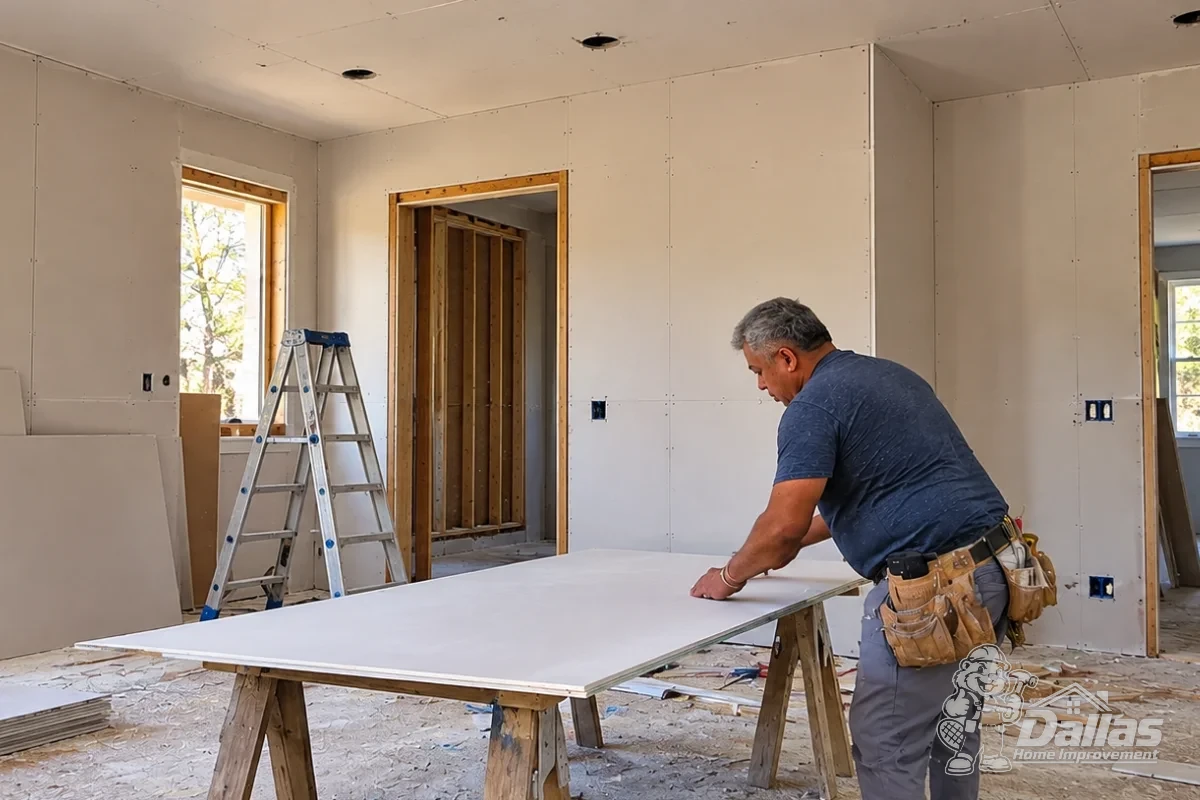
Drywall damage ranges from a doorknob dent to a ceiling soaked by a plumbing leak. The right fix depends less on the size of the damage than on its cause: a small crack that keeps returning can signal more than a large hole from a moving accident.
This guide helps you read common types of damage, decide when a patch is enough and when panels should come out, and understand the finishing steps that make a repair disappear under paint.
- Find and fix the cause of damage before repairing the wall.
- Small, dry, isolated damage is usually patchable.
- Wet, soft, moldy, or crumbling drywall generally needs replacement.
- Joint finishing and primer determine whether a repair shows through paint.
Types of Drywall Damage
Cracks
Hairline cracks along seams or diagonal cracks from the corners of doors and windows are common. In North Texas, expansive clay soils can cause seasonal movement that shows up this way. Cracks that keep widening or appear with sticking doors may warrant a foundation evaluation.
Holes and Dents
Doorknob impacts, anchors, and furniture strikes create holes from nail-size to several inches. These are usually repairable with patching materials sized to the damage.
Nail Pops and Tape Failure
Fastener heads pushing through the surface or joint tape lifting and bubbling are signs of movement or a weak original bond and need resecuring or retaping.
Water Damage
Stains, sagging ceilings, bubbling paint, and soft or crumbling board indicate moisture. These require a different approach, covered below.
When to Repair or Replace Drywall
A repair is typically appropriate when the drywall is dry and structurally sound, the damage is localized, and the cause has been resolved.
A replacement of the affected section or full panels is usually the better choice when the board has been soaked, is soft or crumbling, shows mold growth, or when damage spans a large area where multiple patches would be harder to blend than new board.
- Press gently near the damage: softness indicates moisture damage.
- Look for staining that extends beyond the visible damage.
- Note whether the damage has returned after an earlier repair.
Fix Water Damage at Its Source
Painting over a water stain or patching a soft area hides the symptom while the cause continues. The leak, whether from a roof, a window, plumbing, or condensation, has to be found and repaired first, and the area allowed to dry completely.
Wet drywall and insulation can support mold growth. The EPA advises drying water-damaged areas within 24 to 48 hours to help prevent mold, and porous materials that stay wet or show mold may need to be removed and replaced.
A stain on an upper-floor ceiling often traces back to the roof. Our guide to roof repair versus replacement explains how to approach that source.
When to Seek Professional Help
- Sagging ceilings or drywall that is wet, soft, or crumbling.
- Visible mold or a persistent musty odor.
- Cracks that keep returning, widen, or appear with sticking doors or windows.
- Damage near electrical outlets, fixtures, or plumbing.
- Older homes where sanding may disturb hazardous materials.
In homes built before the 1980s, some joint compounds and textured ceilings may contain asbestos, and paint may contain lead.
Finish Drywall for Painting
A repair disappears only when the finishing blends with the surrounding wall. That usually means several thin coats of compound, each feathered wider than the last and sanded smooth, rather than one thick coat.
Matching Texture
Many homes have orange-peel or knockdown textures. The patch must be textured to match before priming, or it will stand out once painted.
Priming Before Paint
Joint compound absorbs paint differently than the surrounding wall. A primer helps prevent dull or shiny patches, called flashing, in the finished coat.
Common Drywall Repair Mistakes
- Patching over damp drywall or an unresolved leak.
- Applying compound too thickly, which leads to cracking and long drying times.
- Skipping the texture match on textured walls.
- Painting without primer over fresh compound.
- Touching up only the patch instead of repainting the wall section.
For long-term care, address leaks quickly, use proper anchors for heavy items, and install door stops where handles meet walls. For painting after repairs, see our house painting preparation guide. To discuss damaged walls or ceilings, visit our drywall installation and repair services page or request an estimate.
Frequently Asked Questions
Not as a fix. The source of the water must be repaired and the drywall allowed to dry.
Recurring cracks often indicate ongoing movement, from seasonal soil changes, framing movement, or weak joint tape. Reinforcing the joint helps, but cracks that widen or appear with sticking doors may call for a foundation evaluation.
Small holes are usually patched; larger openings are typically repaired by cutting back to framing and installing a new piece of drywall.
Related Home Improvement Guides
Interior vs. Exterior House Painting
Why preparation matters more than the paint can: how interior and exterior projects differ, choosing paint and sheen, timing around weather, and common prep mistakes.
Planning a Home Remodel in Dallas
A practical planning roadmap for Dallas homeowners: set clear goals, define the scope, build a realistic budget, sequence the work, and prepare your home before remodeling begins.