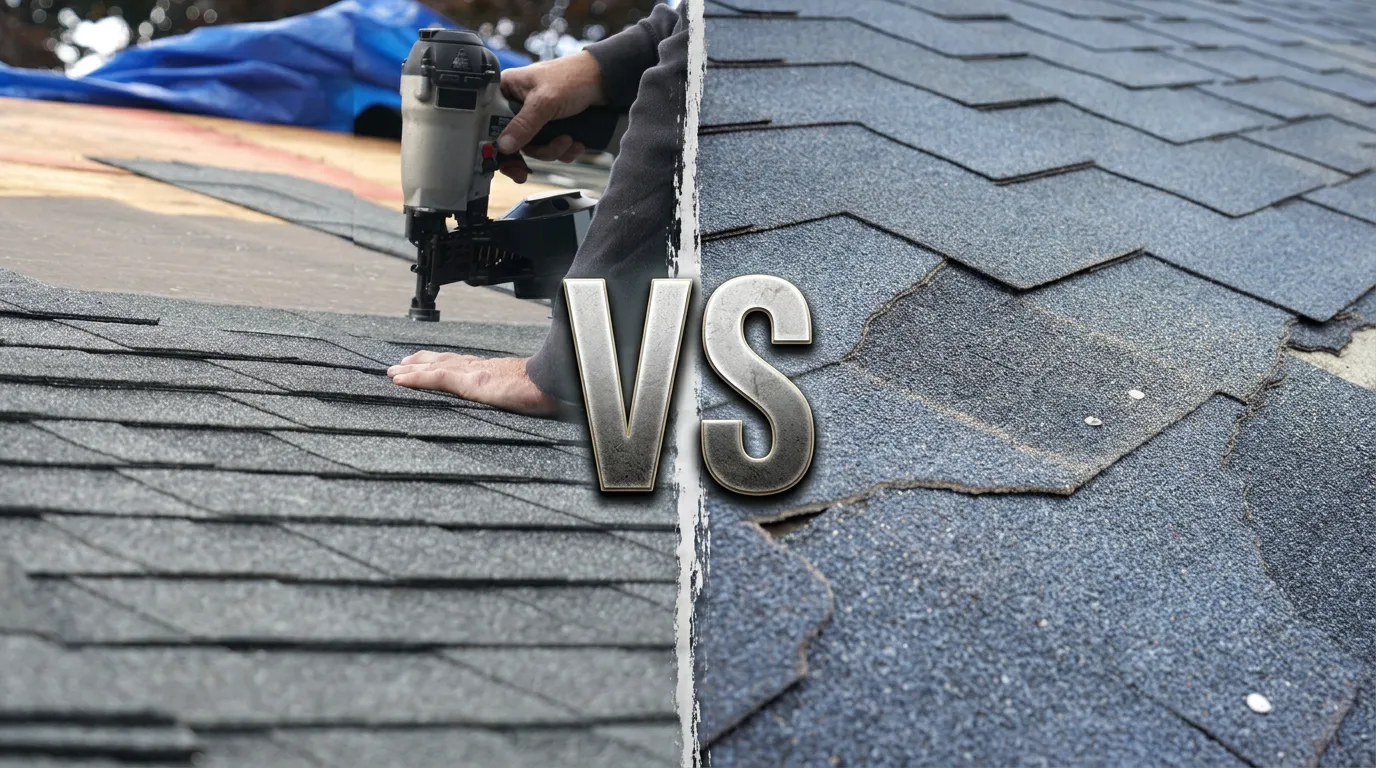
When a roof starts leaking or a storm leaves shingles in the yard, the first question most homeowners ask is whether a repair will do or the whole roof needs replacing.
This guide explains how professionals approach that decision so you can follow the conversation, ask better questions, and recognize when it is time to schedule an assessment. It is not a set of rooftop instructions: roof work involves fall hazards and should be left to trained crews.
- Isolated damage on an otherwise sound roof is often a repair candidate.
- Widespread wear, repeated leaks, or damaged decking point toward replacement.
- Check for warning signs from the ground or the attic, not from the roof.
- Document storm damage promptly and review your insurance policy terms.
Signs of Roof Damage
Many early signs of roof trouble are visible without a ladder. A pair of binoculars from the yard and a flashlight in the attic will reveal more than most people expect.
From the Ground
- Missing, cracked, curled, or lifted shingles.
- Dark patches where protective granules have worn away.
- Granules collecting in gutters or at downspout outlets.
- Bent or loose flashing around chimneys, vents, and walls.
- Sagging lines along the ridge or roof planes.
From Inside the Home
- Water stains or bubbling paint on ceilings and upper walls.
- Daylight visible through the roof decking in the attic.
- Damp insulation, musty odors, or dark stains on rafters.
- Peeling paint near the eaves or soffits.
Repair or Replace Your Roof?
A roof repair addresses a specific, limited problem: replacing a section of wind-damaged shingles, resealing or replacing flashing, or fixing a leak around a vent boot.
A roof replacement removes the existing roofing down to the deck, allows damaged decking to be addressed, and installs new underlayment, flashing, and roofing material as one system.
If an assessment finds damage in one area and solid materials elsewhere, ask about repair. If it finds wear across most of the roof, ask how long a repair would realistically last compared with replacement.
North Texas Weather and Roof Damage
Roofs in the Dallas–Fort Worth area face a demanding mix of conditions. Spring storms can bring hail and strong winds, and long summers expose roofing materials to intense heat and sunlight.
Hail damage is not always obvious from the ground. Impacts can bruise shingles or knock granules loose without leaving visible holes, and those spots may age faster afterward.
Roof Age and Materials
Every roofing material has an expected service life that depends on the product, installation quality, attic ventilation, and exposure.
It also helps to know whether the roof has more than one layer of shingles. Additional layers add weight and can hide deck problems, and they generally need to be removed during a replacement.
What Affects Roofing Work?
- The size, pitch, and complexity of the roof, including valleys, dormers, and skylights.
- The condition of the decking, which is only fully visible once old roofing is removed.
- Flashing and penetrations such as vents, chimneys, and wall intersections.
- Ventilation in the attic, which affects how roofing materials age.
- Gutters and drainage that carry water away from the roof edge.
- Permit requirements in your city. The City of Dallas, for example, requires a building permit when structural members such as rafters are replaced; ask whether the planned work needs a permit where you live.
If roof damage has also stained ceilings or softened drywall inside, plan for those interior repairs once the roof is watertight. Our drywall repair services and the guide on drywall repair versus replacement cover that next step.
Questions for Your Roofer
- Where exactly is the damage, and can you show me photos?
- Is the rest of the roof in good enough condition for a repair to last?
- Will damaged decking be replaced, and how is that priced?
- What underlayment, flashing, and ventilation details are included?
- Is a permit required for this work, and who will obtain it?
- How will landscaping, gutters, and the yard be protected during the work?
When to Schedule a Roof Assessment
Schedule an assessment after a major hail or wind event, whenever you notice an active leak or new ceiling stain, and any time ground-level checks reveal missing shingles or damaged flashing.
Our roof repair and replacement services page explains how we approach roofing work, and you can confirm coverage on our service areas page.
Frequently Asked Questions
Often, yes, if the damage is limited and the surrounding roof is in good condition. A professional should confirm that replacement materials can be integrated properly and that the rest of the roof is not near the end of its service life.
Walking on a roof carries a real risk of falls, and storm-damaged surfaces can be unstable. Check from the ground and the attic, document what you see, and leave rooftop inspection to trained professionals.
Coverage depends on your individual policy, deductible, and the cause and extent of the damage. Review your policy and contact your insurer for an answer specific to your situation.
Related Home Improvement Guides
Planning a Home Remodel in Dallas
A practical planning roadmap for Dallas homeowners: set clear goals, define the scope, build a realistic budget, sequence the work, and prepare your home before remodeling begins.
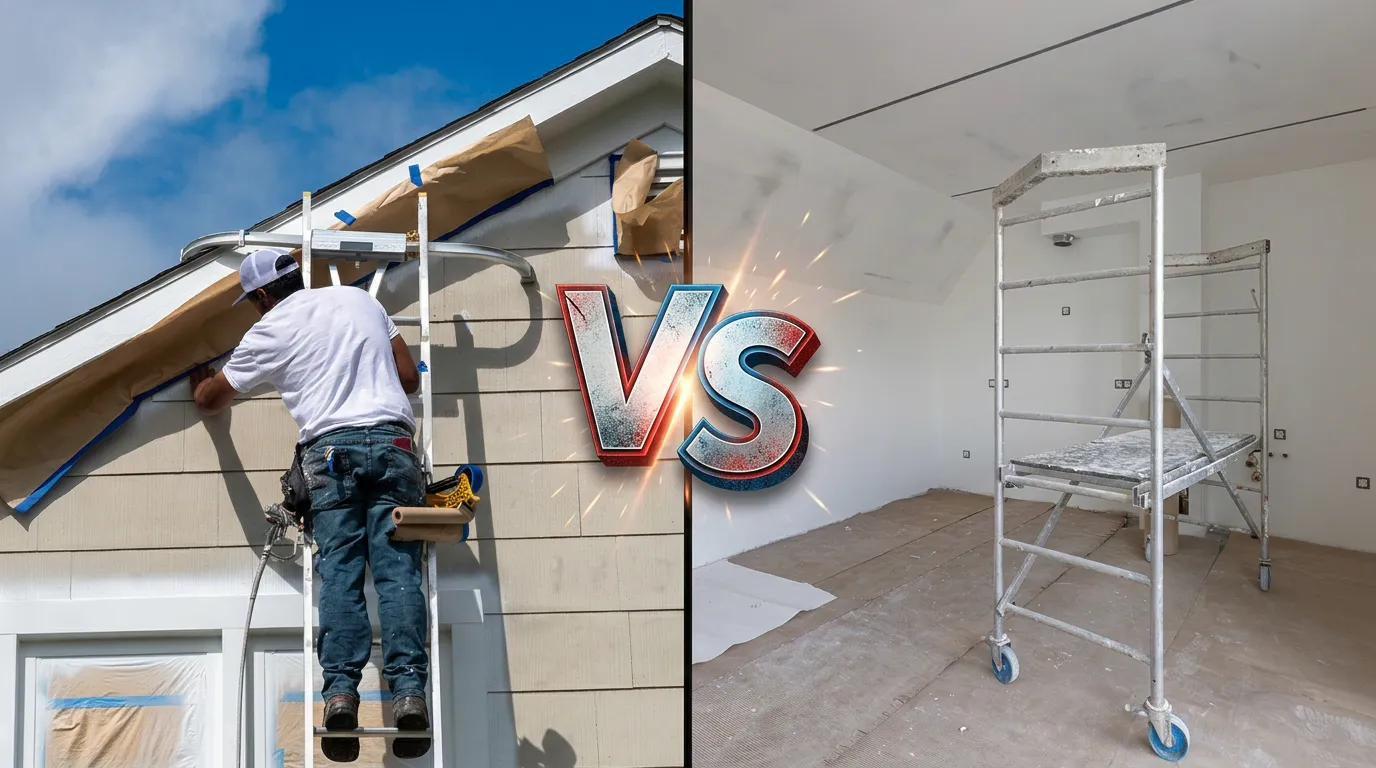
Interior vs. Exterior House Painting
Why preparation matters more than the paint can: how interior and exterior projects differ, choosing paint and sheen, timing around weather, and common prep mistakes.